
project
OBJECTIVE AND SCOPE
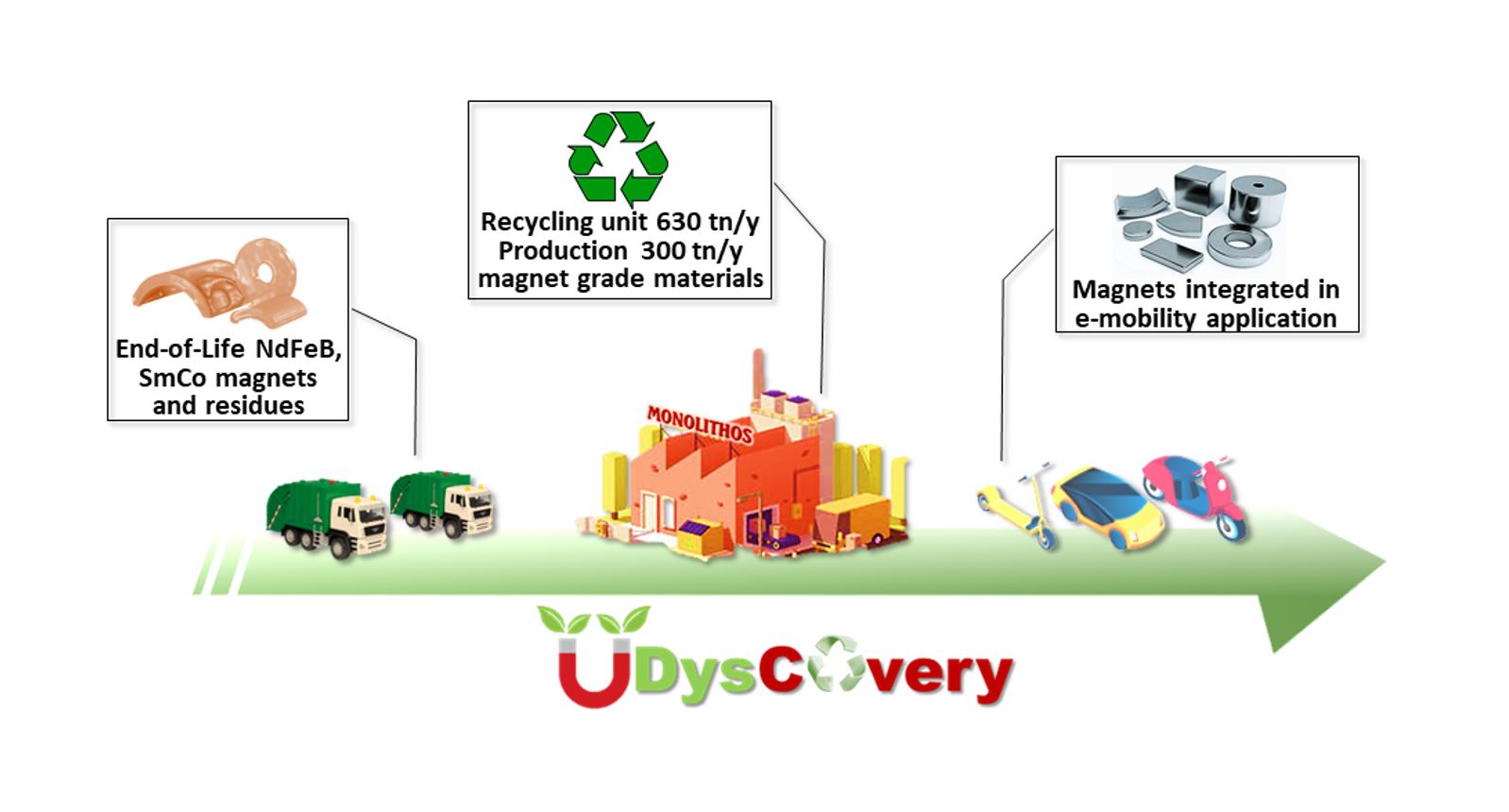
DysCovery is at the forefront of driving innovation in hydrometallurgical process upscaling and the ecological and economical recycling of End-of-Life (EoL) magnets. The project focuses on upscaling three recycling processes—hydrogen-free leaching, extraction chromatography metal separation, and metal/alloy production—aiming to achieve magnet-quality (>95% purity) recycled metals with recovery rates exceeding 90%.
Enhanced Recycling Capacity: DysCovery is set to elevate the European Union’s recycling capacity by a minimum of 23%. This increase will enable the production of magnet-specification metals, amounting to 300 tons per year. These metals can be offered at prices 30% lower than the current market rates, positioning them as cost-effective solutions for the manufacturing of NdFeB/SmCo magnets, particularly for e-mobility applications.
Key Highlights of DysCovery
Overall Objectives: The overarching objectives of DysCovery include:
DysCovery’s comprehensive approach not only addresses the technological challenges associated with recycling processes but also strives to make a substantial impact on the EU’s recycling capacity, economic independence, and the adoption of sustainable materials in critical industries. The project is a pioneering force in reshaping the landscape of magnet production and usage within the EU.
A
IMPACT AND BENEFITS
DysCovery is set to drive innovation in the upscaling of hydrometallurgical processes and the ecologically and economically sound recycling of End-of-Life (EoL) magnets.
Key Contributions of DysCovery:
DysCovery’s multifaceted approach not only propels technological advancements but also addresses economic, environmental, and strategic concerns, reinforcing its pivotal role in shaping the future of magnet recycling and sustainable practices in the EU.
A
SECURING RAW MATERIALS SUPPLY
Critical Raw Materials (CRMs), such as Cobalt (Co) and Rare Earth Elements (REEs), are indispensable for various industrial applications, leveraging their unique physicochemical properties, including low corrosiveness, catalytic capabilities, and low electrical resistivity. The European Union (EU) faces a supply risk for these essential materials due to a surge in demand driven by end-use applications.
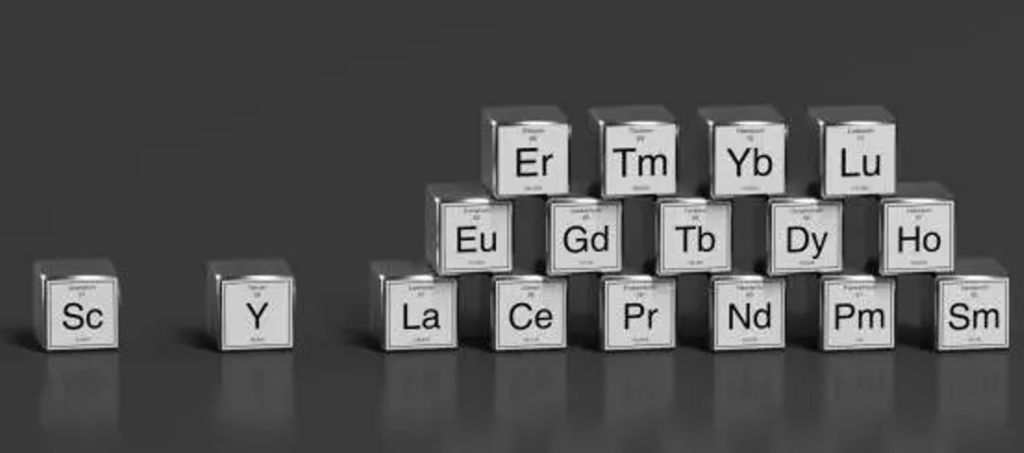

Within Europe, REEs, essential for a multitude of industrial processes, lack complete substitutes, making them indispensable. As the fourth-largest global consumer of REEs, Europe anticipates a surge in demand driven by the growth of e-mobility and green energy initiatives. Key components like Neodymium, constituting 70% of total REE consumption, play a pivotal role, especially in magnets, with 95% of the demand attributed to Neodymium.
Similarly, Cobalt (Co), recognized as a CRM, is gaining prominence in the context of the expanding e-mobility market. Europe, being the world’s second-largest consumer of Co (22%), following Asia (50%), underscores the critical need for sustainable practices.
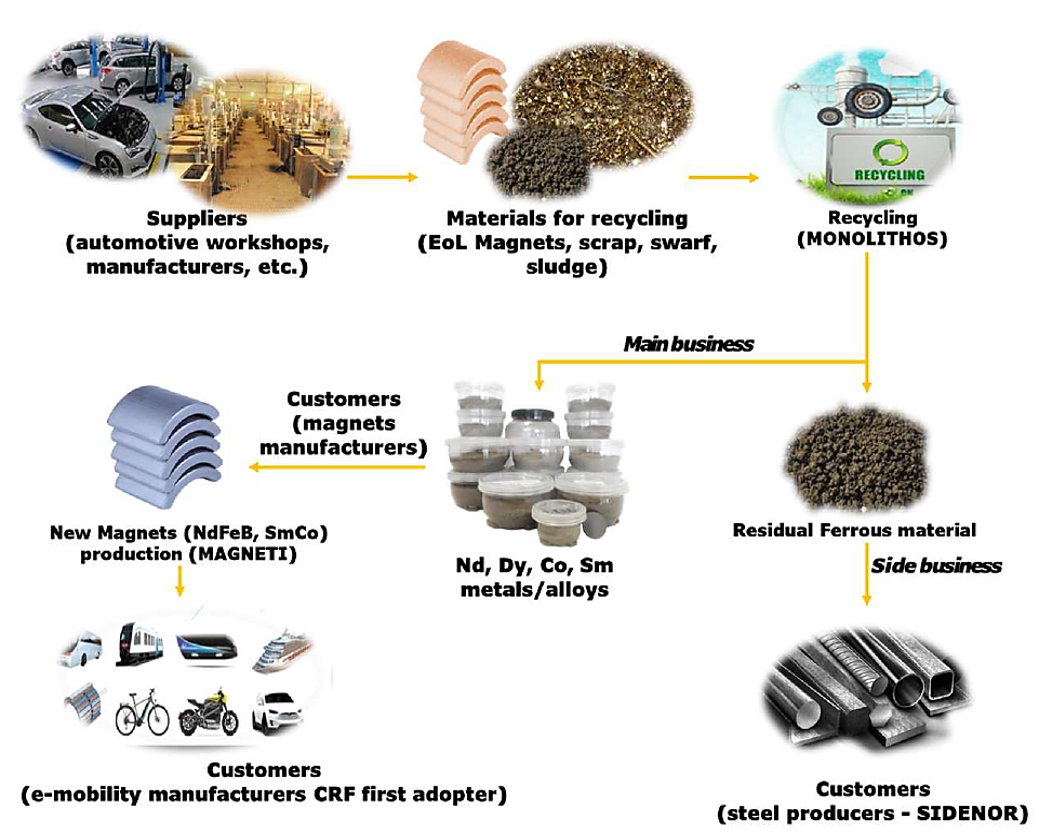
The DysCovery process is poised to revolutionize the recycling landscape, particularly for Neodymium, Praseodymium, Dysprosium, Samarium, and Cobalt (+Iron) recovered from End-of-Life (EoL) magnets. This innovation will enable the production of new, high-quality magnets at competitive prices, contributing to the manufacturing of more affordable electric vehicles.
Furthermore, the integration of CRM materials into various sectors, including batteries, within the European market, will enhance sustainability and reduce dependence on external sources. DysCovery’s impact extends beyond recycling; it is a transformative step towards securing the supply chain, fostering technological innovation, and promoting a circular economy in the EU.

A
ENVIROMENTAL AND SOCIAL SUSTAINABILITY
DysCovery is dedicated to providing innovative solutions for the magnets, e-mobility, and green energy production sectors. Our proprietary DysCovery process is designed as a zero-waste solution, contributing to a sustainable future by selling residual materials (rich in Fe) for steel production to SIDENOR S.A. This not only minimizes waste, but also supports the circular economy.
The extensive replication potential of DysCovery, both within and outside Europe, brings numerous additional benefits, including job creation. By aligning our project activities with the EIT RM scope, we not only contribute to advancing technology, but also address key United Nations Sustainable Development
Goals (UNSDGs).
DysCovery actively contributes to the following fields, relevant to the UNSDGs:
A
CLOSING MATERIAL LOOPS
The permanent magnets market holds significant potential for closed-cycle manufacturing due to its heavy reliance on magnet, Rare Earth Elements (REE), refined, and recycled materials supplied from China. This dependence results in long-distance transportation, contributing to increased CO2 footprints. Moreover, the current production processes often lead to the generation of excess Light Rare Earth Elements (LREE) during primary REE ore mining.
DysCovery aims to address these challenges by becoming the pioneering magnet recycling and manufacturing hub in Southeastern EU. The project introduces innovative, cost-effective, and environmentally friendly recycling processes, fostering a circular economy for metals. DysCovery transforms End-of-Life (EoL) products into high-quality magnets, offering competitive prices for the e-mobility and green energy industries.
The consortium partners, backed by experts in complementary fields within the Critical Raw Materials (CRM), magnet, and renewable energy sectors, form the DysCovery advisory board. Notable contributors include experts from DMT, IMDEA, and SIEMENS ENERGY, as well as ECORESET and ECORESOURCES from Greece. These organizations share a keen interest in the recycling aspect of DysCovery and actively support the project’s goals and outcomes.
A
PRODUCTS
DysCovery is poised to deliver a range of valuable products as outlined below:
DysCovery’s commitment to producing these high-quality materials underscores its dedication to advancing sustainable practices and contributing to the circular economy.